



0 引言
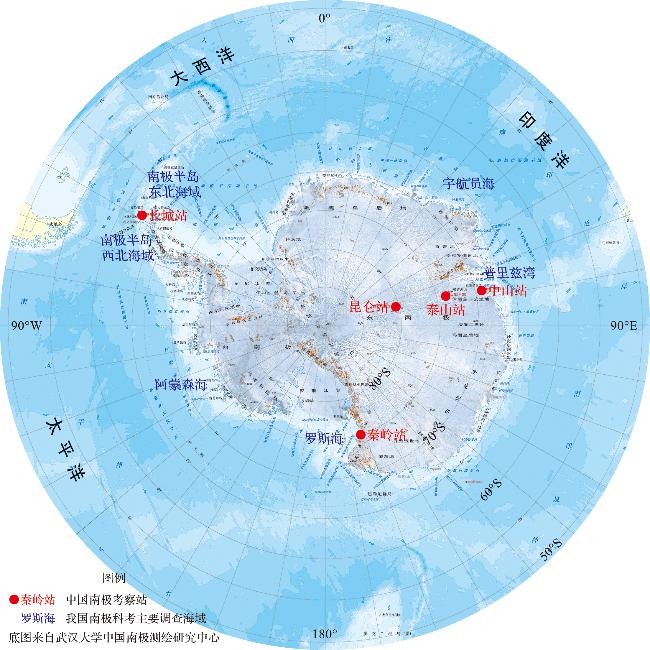
1 深度参与中国首次南极考察
1.1 海洋二所发挥主力军作用
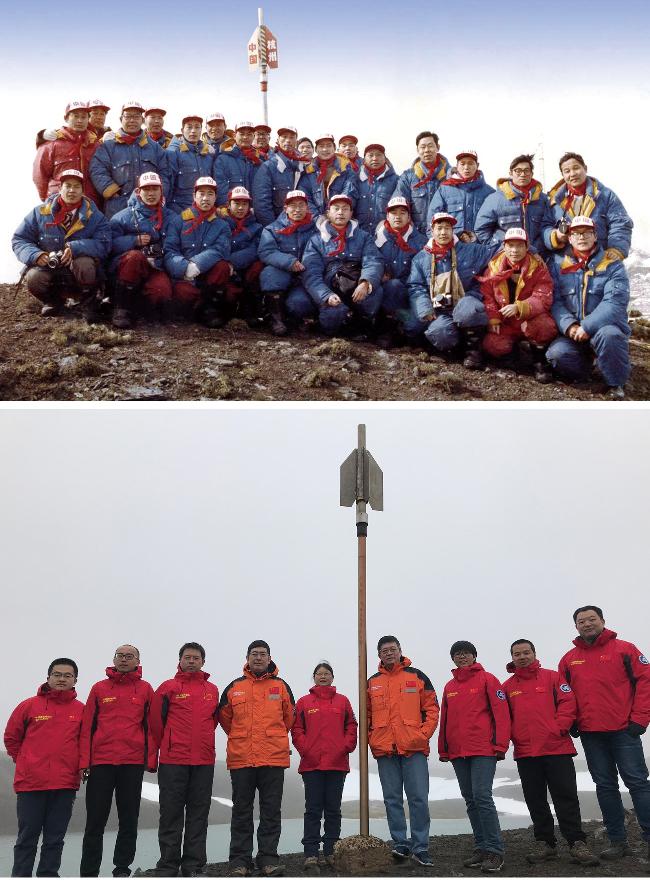
图2 中国南极长城站西湖畔的回响:从首次远征到第卅五次重逢[a: 中国首次南极考察(1984—1985年)期间,国家海洋局第二海洋研究所队员合影;b: 中国第35次南极考察(2018—2019年,首席科学家:陈大可院士)期间,自然资源部第二海洋研究所队员合影。两次合影背景中的金属杆为建站纪念地标,系首次考察的海洋二所队员竖立,杆身漆有“中国杭州”和“国家海洋局第二海洋研究所”字样。摄影:蓝木盛。] Fig.2 Echoes by the West Lake at Chinese Antarctic Great Wall Station: From the first expedition to the 35th reunion [a: Team members from the Second Institute of Oceanography (SIO), State Oceanic Administration during the 1st Chinese National Antarctic Research Expedition (CHINARE-1, 1984-1985). b: Team members from SIO, Ministry of Natural Resources during CHINARE-35 (2018-2019; Chief Scientist: Academician CHEN Dake). The metal pole visible in both images is a commemorative landmark marking the station’s establishment, erected by SIO members during CHINARE-1. The pole is painted with the words “Hangzhou, China” and the former institutional name “Second Institute of Oceanography, State Oceanic Administration”. Photo by LAN Musheng.] |
1.2 开启沉积环境与早期成岩研究
1.3 多介质氟、碘、硒生物地球化学研究
2 开拓东南极科学考察
2.1 深化对氟、碘、硒等微量生命元素生物地球化学行为的认识
2.2 开启水体及沉降颗粒物中有机碳研究
3 系统性深入研究
3.1 水体颗粒有机碳特征及调控机制
3.2 关键过程量化与长期变化分析
3.3 生源要素沉降通量的季节特征
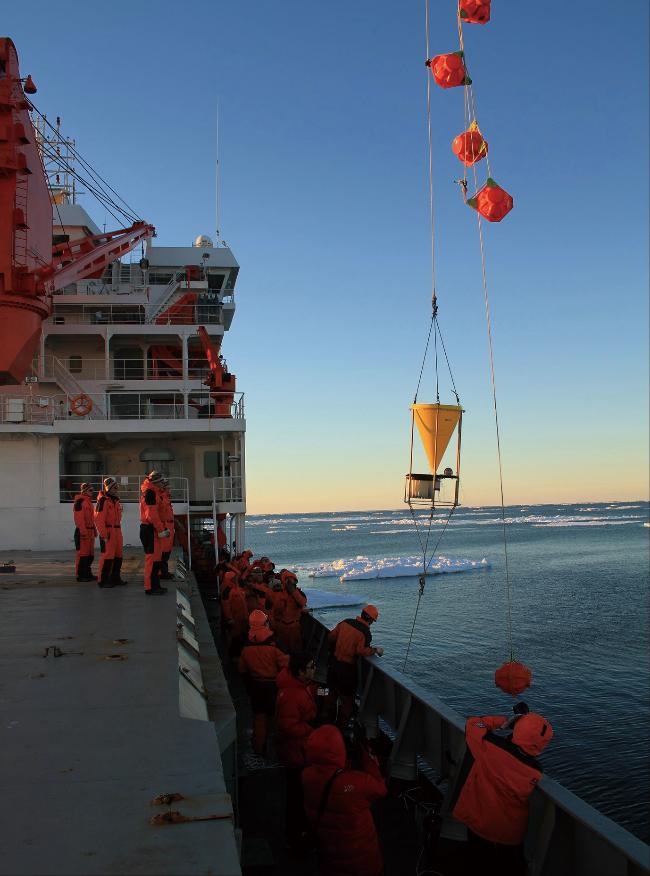
图3 我国成功回收首套在南极边缘海布放并运行一年的时间序列沉积物捕获器[该套配备时间序列沉积物捕获器的锚系潜标系统,系中国第27次南极考察(2010—2011年)期间由海洋二所科研人员在普里兹湾布放,并于次年通过中国第28次南极考察顺利收回。此举首次实现了基于无人值守平台对南极高碳汇边缘海沉降物质通量季节性变化的连续观测,为研究极地生态系统与碳汇格局演变提供了重要数据支撑。摄影:韩喜彬。] Fig.3 China has successfully retrieved its first time-series sediment trap that had been deployed and operated for one year in the Antarctic marginal sea [The moored submersible buoy system equipped with a time-series sediment trap was deployed in Prydz Bay by researchers from SIO during CHINARE-27 (2010-2011) and successfully recovered the following year during CHINARE-28. This achievement marks the first continuous unmanned observation of seasonal variations in settling particulate flux in the high-carbon-sink Antarctic marginal sea, providing key data for research on polar ecosystem dynamics and carbon sink patterns. Photo by HAN Xibin.] |
3.4 沉积记录中的生物地球化学信息
4 南极环境综合考察与评估
4.1 长期考察海域:普里兹湾
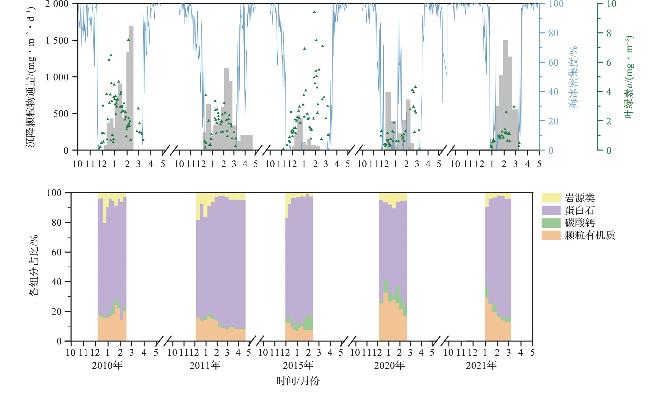
图4 南极普里兹湾颗粒物沉降通量存在显著的年际波动[2014—2015年期间的颗粒有机碳(POC)沉降通量仅为2009—2010年同期的12.5%。这种差异主要归因于缺乏足够的“压舱物”效应,导致上层水体中的有机质无法快速沉降,从而使其更充分地被异养微生物降解,降低了POC的沉降效率。此外,海冰融化通过影响浮游植物的旺发、群落演替以及浮游动物的摄食行为,也对颗粒物沉降通量产生调控作用[53,82,91]。] Fig.4 Significant interannual fluctuations in the particulate matter flux in Prydz Bay, Antarctica [The particulate organic carbon (POC) flux during 2014-2015 was only 12.5% of that recorded in 2009-2010. This difference was primarily attributed to the insufficient “ballast effect”, which hindered the rapid sinking of organic matter from the upper water layer. As a result, the organic matter was more thoroughly degraded by heterotrophic microorganisms, reducing the deposition efficiency of POC. Additionally, sea ice melting also modulated the particulate flux by influencing phytoplankton blooms, community succession, and zooplankton grazing behavior[53,82,91].] |
4.2 低纬亚南极海域:南极半岛
4.3 底层水生产海域:罗斯海
4.4 变暖显著海域:阿蒙森海
4.5 企鹅栖息地环境研究
5 南极重点海域对气候变化的响应与影响
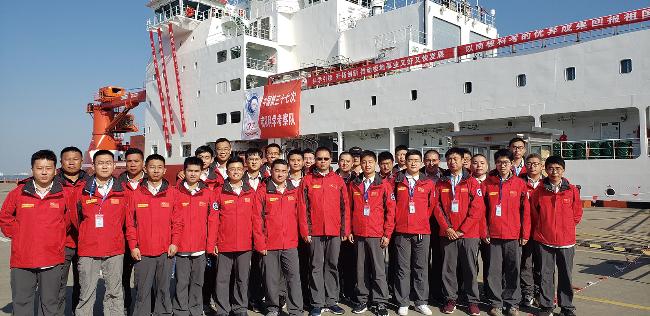


图5 中国第37次南极考察(2020—2021年)出发前,全体海洋科学考察队员合影[本航次由自然资源部任命海洋二所赵军副研究员(前排右六)担任首席科学家。考察由“雪龙2号”单船执行,历时179天,成为我国迄今历时最长的单船南极科学考察任务。此次考察旨在系统掌握南极重点海域的基础生态系统特征与水体和底质环境状况,评估全球气候变化对南极关键海域的海洋环境、特殊生境、关键物种及主要生态过程的影响,为相关研究提供了重要的基础数据和科学依据[111]。] Fig.5 Group photo of all marine scientific team members before the departure of CHINARE-37 (2020-2021) [This expedition, with Associate Researcher ZHAO Jun (front row, 6th from right) from SIO appointed as the chief scientist by the Ministry of Natural Resources, was carried out by the icebreaker “Xue Long 2” over 179 days, making it China’s longest single-vessel Antarctic scientific mission to date. The expedition aimed to systematically characterize the basic ecosystem features and the hydrographic and substrate conditions in key Antarctic sea areas, and to assess the impacts of global climate change on the marine environment, unique habitats, key species, and major ecological processes in these regions. The work has provided essential baseline data and scientific support for related research[111].] |