0 引言
1 材料与方法
1.1 研究区域和样品采集
1.2 实验设计
1.2.1 岩石池驯化实验
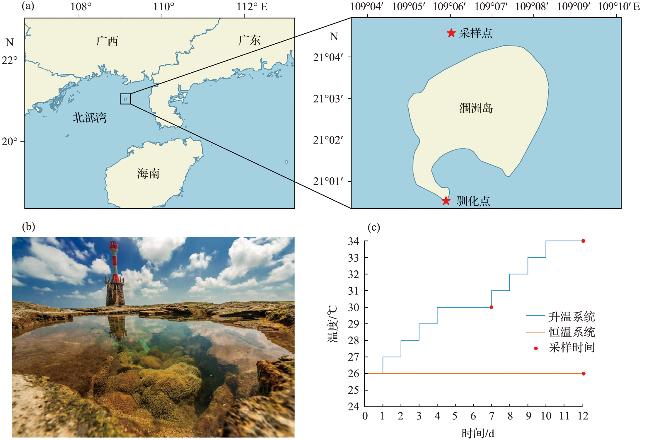
1.2.2 高温胁迫实验
1.3 虫黄藻密度及叶绿素a含量测定
1.4 氧化应激指标及蛋白质量浓度测定
1.5 实验数据处理
2 结果
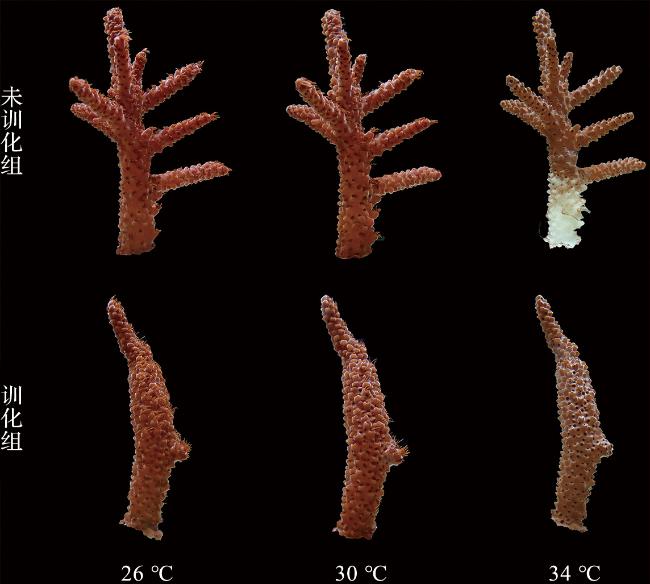
2.1 高温胁迫下美丽鹿角珊瑚的表型变化
2.2 高温胁迫下虫黄藻密度与叶绿素a含量的变化
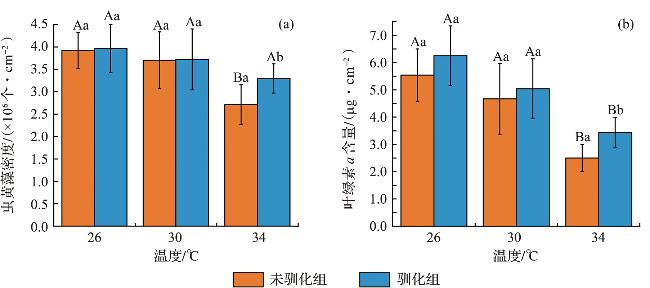
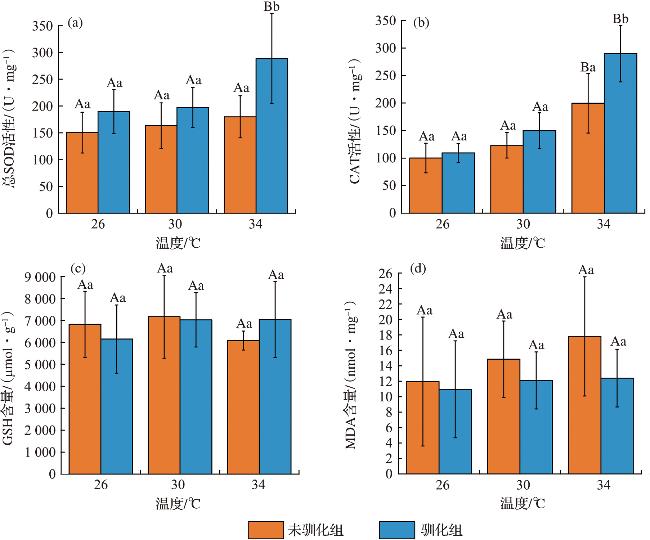
图3 两组美丽鹿角珊瑚在高温胁迫过程中的生理指标变化〔数据以平均值±标准差表示(n=5)。大写字母表示同一处理组不同温度间的差异显著性(one-way ANOVA,LSD),小写字母表示同温度下未驯化组与驯化组间的差异显著性(independent-samples t-test);字母不同表示差异显著(p<0.05)。例如,“Aa”与“Ba”大写字母不同,表示同一处理组内相应温度间差异显著;“Ba”与“Bb”小写字母不同,表示相同温度下两组间差异显著。图4同此。〕 Fig.3 Changes in physiological indicators of two groups of Acropora muricata during thermal stress [Data are presented as mean±standard deviation (n=5). Uppercase letters indicate significant differences among temperatures within the same treatment group (one-way ANOVA, LSD), and lowercase letters indicate significant differences between the non-acclimated and acclimated groups at the same temperature (independent-samples t-test). Different letters indicate significant differences (p<0.05). For example, different uppercase letters between “Aa” and “Ba” indicate a significant difference among temperatures within the same treatment group, whereas different lowercase letters between “Ba” and “Bb” indicate a significant difference between the two groups at the same temperature. The same applies to Fig.4.] |